
The world has been talking about carbon markets for decades, but Malaysia has just moved from talk to action.
Climate change presents substantial risks to Malaysian society, economy, infrastructure and natural ecosystems. In response, the Ministry of Natural Resources and Environmental Sustainability (“NRES”) has released the National Carbon Market Policy (“NCMP”), a comprehensive policy framework that fundamentally changes how Malaysian businesses, project developers, investors and government bodies will interact with greenhouse gas emissions and carbon credits.
The National Climate Change Policy 2.0 (“NCCP 2.0”) sets out the country’s roadmap to a cleaner and greener economy, with the NCMP as one of its centrepiece tools. In practical terms, this means using market forces to drive down emissions faster, partly by allowing carbon credit revenues to help fund projects that would otherwise struggle to attract investment.
In short, carbon is no longer just an environmental issue. It is quickly becoming a commercial and regulatory reality for businesses across Malaysia.
Before diving into the mechanics, it helps to understand why this policy exists. Malaysia has made a significant pledge to the world.
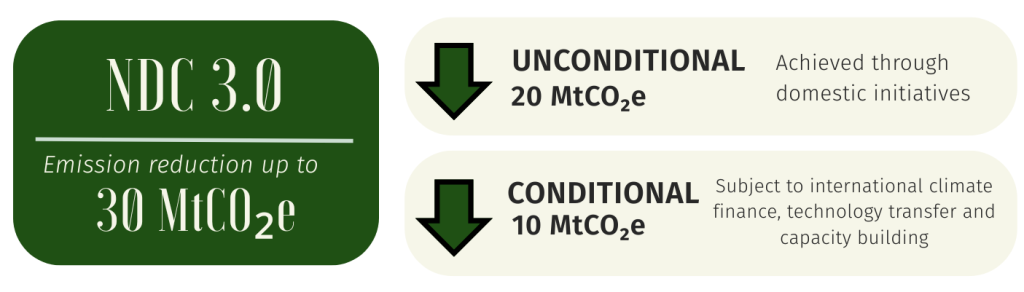
Malaysia intends to achieve an absolute reduction of 15-30 million tonnes of CO₂ equivalent by 2035 from the peak level between 2029 and 2034. In this context, carbon markets and the use of offsets play an important role in mobilising international carbon finance and investment, particularly to support the conditional elements of Malaysia’s Nationally Determined Contributions (“NDC”).
Think of a carbon market as a marketplace, but instead of buying and selling goods, participants trade carbon credits. Each credit represents one tonne of CO₂ emissions that has been reduced, avoided, or removed from the atmosphere.
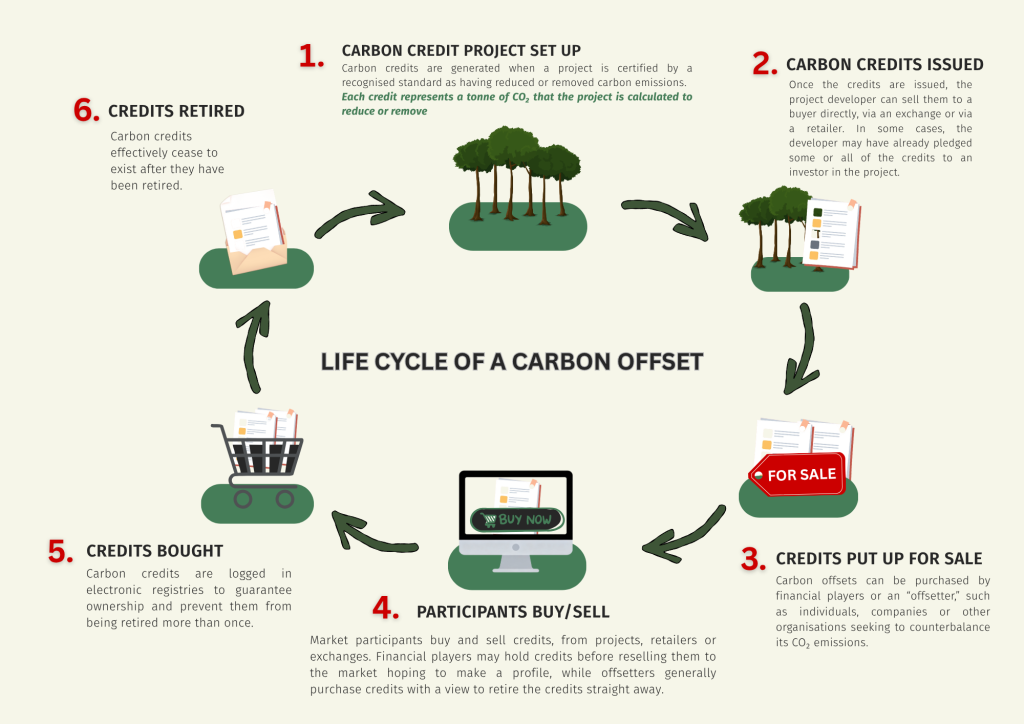
Buyers of carbon credits channel finance to project developers, who utilise the revenue from carbon credit sales, to achieve financial viability for projects that would otherwise not be feasible.
Buyers in the carbon markets generally fall into two broad categories: Voluntary buyers who allow entities to purchase carbon credits as part of corporate sustainability strategies, internal mitigation goals or preparatory efforts for future regulation; and Compliance buyers who operate under regulatory frameworks requiring participants to reduce emissions, with the option to use offsets under carbon pricing instruments and cooperative approaches.
A key piece of the puzzle is Article 6 of the Paris Agreement, the international framework that governs how countries can cooperate on carbon markets.
Article 6 of the Paris Agreement provides for voluntary cooperation among Parties in achieving their NDCs. Paragraph 2 of Article 6 enables this cooperation through internationally transferred mitigation outcomes (“ITMOs”) and enables countries to enter bilateral or multilateral arrangements involving ITMOs, while paragraph 4 introduces a mechanism to contribute to mitigation and support sustainable development.
Malaysia has already signed bilateral Memoranda of Understanding (“MOUs”) under Article 6.2, such as with Singapore and South Korea, which both facilitate voluntary cooperation through ITMOs to support NDC achievement.
The NCMP is built on four core pillars, each addressing a distinct but interconnected aspect of the carbon market:
|
Pillar |
Focus |
What It Means Practically |
| Pillar 1 | High-Integrity Carbon Market | Developing a high-integrity carbon market grounded in robust systems that ensure transparency, traceability and accountability to facilitate participation in international carbon markets. |
| Pillar 2 | Market Ecosystem & Infrastructure | Creating a supportive ecosystem with the institutional, technical and regulatory infrastructure needed for a well-functioning market, including a national carbon registry, standardised MRV system and clear eligibility criteria. |
| Pillar 3 | Carbon Credit Trading | Catalysing carbon trading by improving efficiency and accessibility of market mechanisms, including mobilising finance for carbon projects and strengthening demand for carbon credits. |
| Pillar 4 | Sectoral Decarbonisation Linkages | Strengthening connections between domestic and international carbon mechanisms to unlock market access and improve competitiveness, including integration with potential carbon pricing instruments (“CPIs”) and regional cooperation through ASEAN initiatives. |
For businesses looking to participate in Malaysia’s carbon market, three pieces of infrastructure are being put in place that will matter enormously.
1. The National Carbon Registry
The National Carbon Registry will act as the authoritative repository for all carbon emissions data and assets, ensuring traceability of carbon assets in accordance with the agreed process. It will also manage market-facing functions of the carbon market, including the facilitation of allowance auctions and carbon credit trading.
2. The MRV Framework (Monitoring, Reporting & Verification)
To establish a high-integrity carbon market in Malaysia, a robust MRV system is critical to ensure transparency, credibility and consistent application across sectors and jurisdictions. MRV serves as the structured backbone for tracking and validating greenhouse gas (“GHG“) emissions, as well as for quantifying emission reductions from mitigation activities eligible for carbon crediting and compliance offset use.
3. Strict Eligibility Criteria
The policy sets out clear standards that any carbon project must meet to qualify, ensuring that carbon credits are genuine and measurable, to prevent greenwashing and to build trust among domestic and international stakeholders. The key criteria include:
|
Criterion |
Requirements |
| Additionality | Credits must represent reductions beyond regulatory or business-as-usual scenarios. |
| Permanence | Reductions must be permanent, with measures to address reversal risks. |
| No Leakage | Prevent or account for emissions shifted outside project boundaries. |
| No Double Counting | Prevent multiple claims on the same reductions. |
| Anti-Greenwashing | Prevent fraudulent claims or unverifiable credits. |
| Enforcement | Penalties for violations to ensure compliance. |
At present, Malaysia’s government crediting programme centres on one key product: forestry-based carbon credits. Additional sectors may be considered in the future, subject to readiness and policy decisions.
The Forest Carbon Offset (“FCO”) is a market mechanism that allows the transfer of emissions reduction from forests to the buyers in the form of carbon offsets.
Looking ahead, the policy signals future expansion into technology-based sectors, including transport (EV charging and fuel switching), energy (energy efficiency and renewable energy), waste (recovery and recycling, and biomass utilisation) and carbon capture technologies (carbon capture and storage, and carbon mineralisation).
Underpinning the four pillars are five cross-cutting enablers, the foundations without which none of the above can function.
| 1 | Legislative and Regulatory Framework | Provides a legal basis to govern market activities, ensure compliance and facilitate cross-sectoral collaboration required to achieve Malaysia’s climate targets, anchored by the Climate Change Act. |
| 2 |
Governance and Coordination
|
Ensures the clear delineation of authority among relevant bodies and rigorous oversight on policy implementation. |
| 3 | Human Capital Development | Equips regulatory authorities, market participants and communities with the skills and knowledge needed to ensure institutional readiness to operate in the carbon market, in alignment with international standards. |
| 4 | Communication, Education and Public Awareness | Builds public trust and social inclusivity by connecting the public’s understanding of carbon market actions to tangible benefits for both the public and industry. |
| 5 | Finance and Revenue Recycling | Supports funding for carbon market infrastructure through carbon revenues and, where appropriate, government funding or other sources, while ensuring effective use of proceeds, guiding revenue allocation and supporting studies. |
Of particular note for businesses, a legislative and regulatory framework is vital to establish a credible and effective national carbon market. It provides the legal basis to govern market activities, ensuring compliance and enabling coordinated climate action across all sectors and jurisdictions. The NCMP is supported by the NCCP 2.0 and the Climate Change Act.
The Climate Change Act, when enacted, will be the anchor legislation that gives legal teeth to everything in this policy.
Regardless of your sector, the NCMP creates a new landscape of both obligations and opportunities:
Obligations to Watch
Opportunities to Seize
The NCMP is not simply a government policy document, it is a signal that the era of voluntary and ad hoc carbon action in Malaysia is coming to an end. In its place, a structured, legally backed and internationally integrated carbon market is being built.
For businesses, this means:
If you have any query, please contact the author, Joyce Ong Kar Yee, Partner in the ESG and Sustainability Practice (oky@lh-ag.com). This article was co-authored by Hannah Jasmin binti Jefferelli, Pupil.