The Company in this case is the principal inflight catering services provider at both the Kuala Lumpur International Airport and Penang International Airport. The Claimant, meanwhile, last held the position of Executive in the Company’s Facilities Management Department in the Company’s Penang Flight Kitchen. The Claimant’s responsibilities included, among others, planning, restoring and maintaining the serviceability of overall maintenance equipment, building facilities and other support services. In July 2023, it came to the management’s attention that there were 2 major incidents of high lifts vehicles breaking down at the Penang Flight Kitchen which required major repairs. In view of this, the Company commenced technical investigations. Ultimately, after due inquiry, the Claimant was found guilty of:
(a) Marking the checklists on all the Monthly Vehicle Report (Hi-Lift) of 4 high lifts in the Company’s Penang Flight Kitchen for the months of December 2022 until May 2023 simultaneously (“1st Charge”);
(b) Failing to comply with the prescribed procedure, by attaching the same pictures of the high lifts in the Monthly Vehicle Report (Hi-Lift) of all 4 high lifts for the months of September 2022 to July 2023 (“2nd Charge”); and
(c) Signing and verifying a blank Monthly Vehicle Report (Hi-Lift) of one of the high lifts which was not filled out by his subordinate, a Technician in the Maintenance Department (“3rd Charge”).
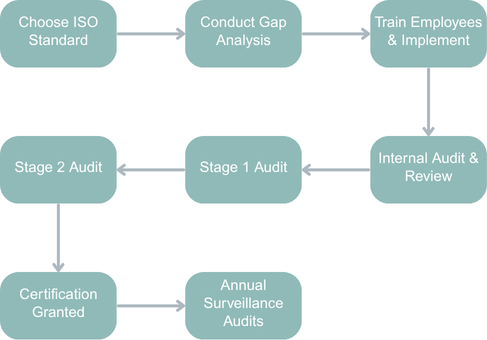
The Claimant admitted that he was guilty of the 3rd Charge and not guilty of the 1st Charge & 2nd Charge. In dismissing the Claimant’s unfair dismissal claim, the Industrial Court found, among others, that the Monthly Vehicle Reports (Hi-Lift) are crucial to the Company’s operations as it is the industry’s practice to fulfil ISO requirements. The Claimant himself understood and agreed that the Monthly Vehicle Reports (Hi-Lift) are for the purposes of fulfilling the ISO standards. Therefore, the Court held that fulfilling ISO requirements is not merely administrative as the Company is expected to maintain routine, accurate and up-to-date records of the Monthly Vehicle Reports (Hi Lift). This is especially important in view of the high lifts being safety-critical machinery, to ensure that any defects, maintenance issues, or potential hazards are identified promptly. In return, it ensures the safety of not only the Company’s employees operating the high lifts but also the public. Thus, the Claimant’s misconducts could cause accidents where the reports are not clear. The Court went on to find as follows:
(a) It is important for the Monthly Vehicle Reports (Hi Lift) to be accurate in documenting the current condition of the high lifts and it cannot be diminished or trivialised in the manner attempted by the Claimant.
(b) The Claimant’s misconducts demonstrated that he had disregarded set procedures in breach of the Company’s Disciplinary Handbook and the Company had successfully established the charges on a balance of probabilities.
(c) The Claimant’s misconducts in this case clearly point to a breach of his duties to faithfully and diligently discharge his duties owed to the Company as his employer, making it unsafe and unreasonable for the Company to keep him in employment.
(d) The Claimant has failed to exercise the responsibilities and accountabilities expected of employee in his position. It is clear from the evidence that the Claimant had chosen to ignore the standard procedures that had been placed to safeguard the Company and its interest. Hence, the punishment of dismissal was appropriate in this case and was indeed commensurate with the misconduct.
The Company was represented in the Industrial Court by partner, Arissa Ahrom, of Lee Hishammuddin Allen & Gledhill.
The Industrial Court Award may be found here.
If you have any queries, please contact Shariffullah Majeed (sha@lh-ag.com) or Arissa Ahrom (aa@lh-ag.com).